GetThere
2023
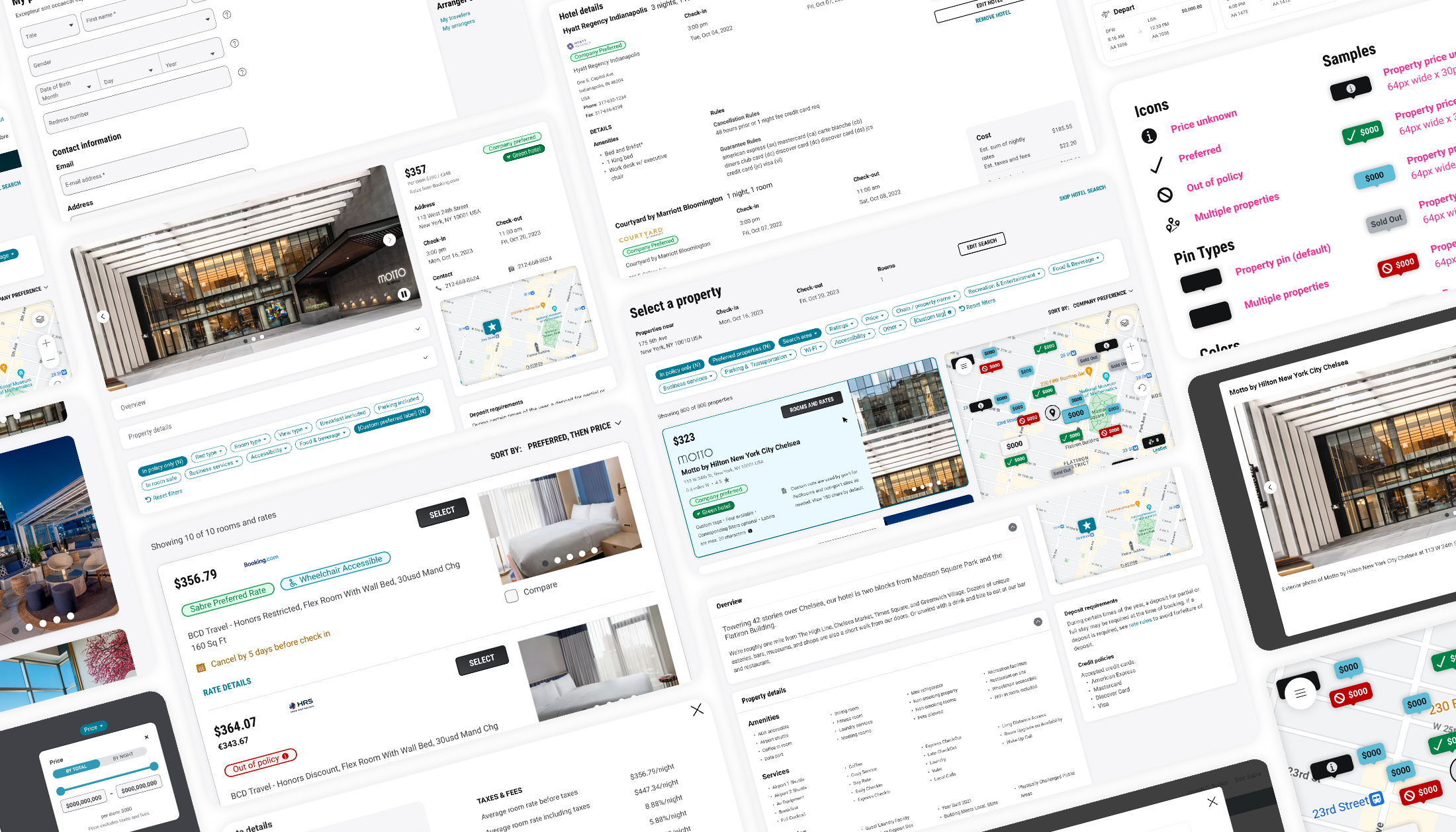
Snapshot
Closing a competitive UX gap in enterprise hotel shopping
Problem
Mandatory migration to a new service within an enterprise booking platform.
Role
Sole UX Designer leading end-to-end design.
Complexity
Enterprise travel workflows, parallel redesign efforts (vehicles), and the need to balance visual polish with scalable information hierarchy.
Outcome
Validated a map-centric hotel search model, simplified filtering, and improved comparison workflows, resulting in clearer decision-making and a more scalable information structure.
1. Context & Business Problem
GetThere is a business travel management platform serving enterprise travelers and travel managers.
A mandatory migration to a new web service created an opportunity to modernize the Hotels experience. While overall satisfaction was acceptable (5.5/7), comparative research revealed a competitive gap — leading competitors averaged 6.6/7.
The Hotels experience lagged in:
- Map functionality and detail
- Filtering usability
- Property comparison capabilities
- Visibility of reviews and star ratings
- Visual polish and information hierarchy
The business risk was clear: enterprise travelers were receiving an experience perceived as inferior to market alternatives.
2. Constraints & Complexity
- Enterprise booking environment
- Business traveler persona with policy constraints
- Alignment required with parallel Vehicles redesign
- Technical migration dependency
- High expectation for competitive parity
- Limited tolerance for regression in core workflows
I served as the sole UX designer for this initiative.
3. Strategic Decisions
Three key strategic pivots shaped the redesign:
- Move to a map-centric model.
Research showed map shopping was valuable but underdeveloped. We shifted from a list-first paradigm to a divided map/list experience. - Surface critical decision-making signals earlier.
Photos, ratings, and key amenities were brought into search results to reduce decision friction. - Simplify filtering and comparison.
Filters were restructured and relocated for easier manipulation, and property comparison was streamlined.
Search Experience
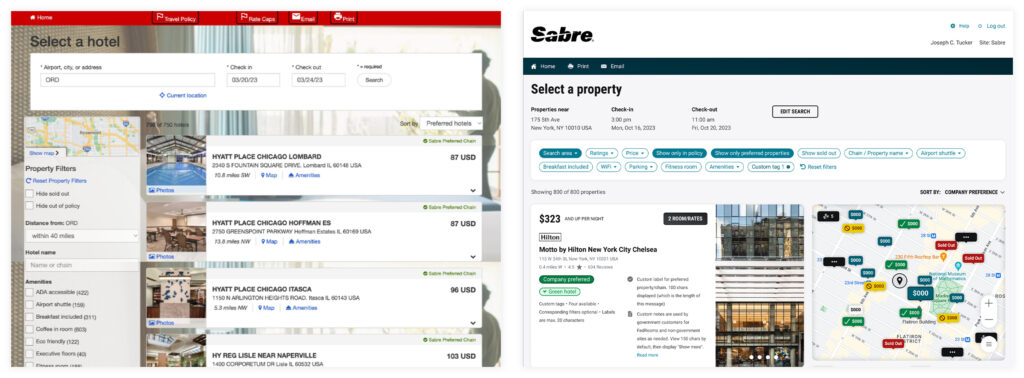
Before: Hotel search relied on a list-first experience with limited visual hierarchy and minimal decision signals.
After: The redesign introduced a map-centric layout with improved visual hierarchy, surfacing ratings, imagery, and key amenities directly in the results to support faster decision-making.
4. Design Approach
- Conducted unmoderated comparative study to benchmark against competitors
- Developed multiple conceptual directions and validated with users
- Partnered with a design technologist to build a high-fidelity interactive prototype
- Tested map/list interactions, filter logic, and comparison workflows iteratively
- Refined information density and collapsible content behavior
Investment in a functional prototype was critical to uncovering nuanced interaction issues before engineering commitment.
Rate Comparison
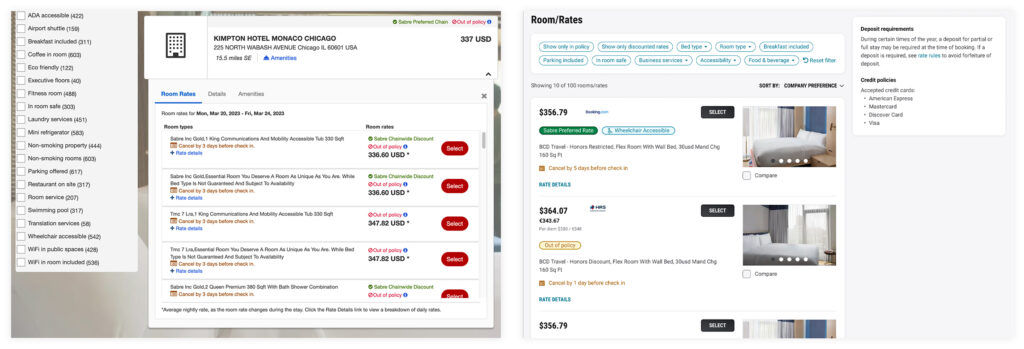
Before: Room and rate details were fragmented across dense content blocks, requiring additional scanning to compare options.
After: The redesigned layout simplified rate comparison and clarified room information, reducing cognitive load while preserving necessary detail for business travelers.
5. Leadership & Influence
As sole designer, I:
- Represented UX across all product meetings
- Directed research alignment
- Created and refined interaction models
- Managed timelines from concept through validation
- Presented design rationale to stakeholders
- Ensured consistency with enterprise design language
This initiative ran April–November 2023.
6. Outcomes & Impact
Rate Comparison
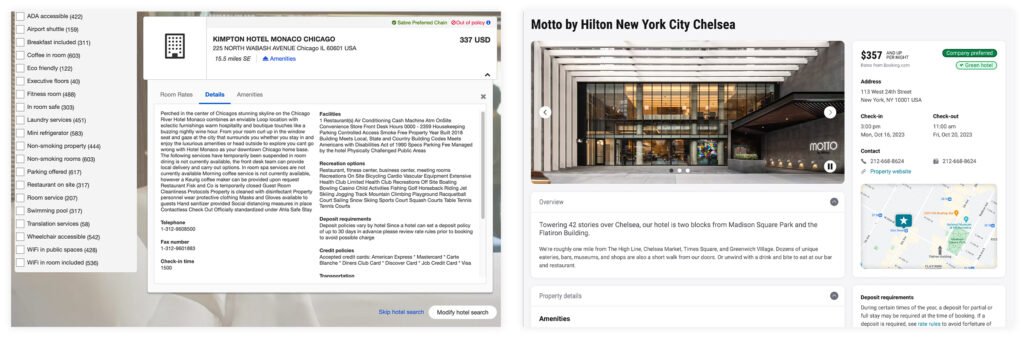
Before: Property pages lacked visual hierarchy and buried critical decision-making information such as reviews and amenities.
After: The redesign reorganized property details with clearer grouping, stronger visual hierarchy, and improved access to key decision signals.
Post-prototype usability testing confirmed:
- Strong validation of map-centric approach
- Simplified filters were intuitive and appreciated
- Property comparison was clear and efficient
- Information hierarchy improved scanability
Quantitative results:
- Satisfaction increased from 5.5 to 6.28 (7-point scale)
- Ease of use scored 6.33/7
- Competitive gap narrowed significantly
7. Reflection
This project demonstrated that modernization isn’t just aesthetic. Competitive benchmarking, prototype investment, and strategic simplification can materially shift perception in mature enterprise products.
Acting as sole designer required balancing research rigor, systems alignment, and delivery discipline to ensure measurable improvement — not just visual refresh.