Market Connect
2018 – 2020
Leading a 100+ contributor enterprise transformation to unify fragmented hotel rate systems
1. Context & Business Problem
Market Connect was an initiative to consolidate multiple legacy hotel rate tools into a single enterprise platform serving global hospitality partners, including IHG.
Sabre and IHG sought to:
- Unify disconnected buyer and supplier workflows
- Simplify complex RFP cycles
- Improve usability across role-based experiences
- Modernize a fragmented product ecosystem
The vision was ambitious: create a cohesive platform that could support seasonal, high-stakes enterprise workflows while serving diverse user roles within hospitality organizations.
I joined the initiative in early 2018 after initial strategy definition and led design through 2020.
2. Constraints & Complexity
This was the largest initiative I’ve led.
- 100+ cross-functional contributors across continents
- 6 UX designers, 2 researchers, 6 product owners, 90+ engineers
- Offshore engineering operating asynchronously
- 11 role-based personas with distinct workflows
- Incomplete or evolving business requirements
- Organizational turnover across both Sabre and IHG teams
- Seasonal RFP cycles requiring learnability after long inactivity
Additionally, this was not a greenfield concept.
We were merging existing tools with deeply embedded user behaviors.
Complexity was structural, organizational, and operational.
Team Alignment
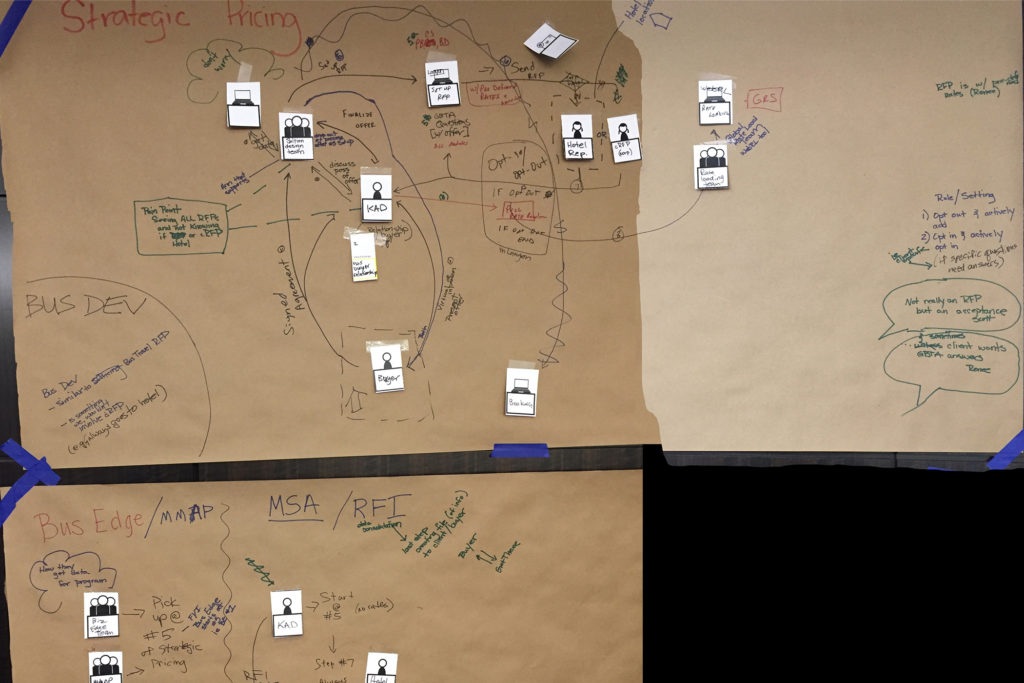
Early workshops used collaborative exercises such as business origami and empathy mapping to align cross-functional teams on user needs, workflows, and system complexity.
User Understanding
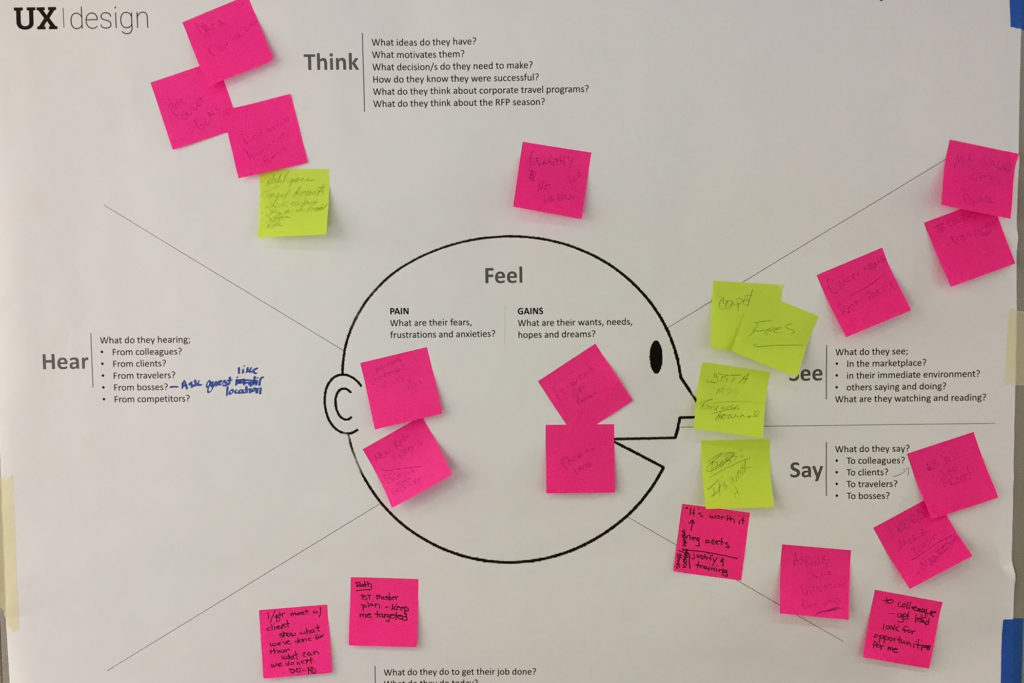
Empathy mapping helped clarify the needs of multiple hospitality personas and identify shared friction points across fragmented legacy tools.
3. Strategic Decisions
Three decisions shaped the trajectory of the program:
- Formalize cross-functional scope alignment.
Early requirements were incomplete and open to interpretation. I introduced structured BRD review sessions across product, UX, and development to reduce ambiguity before design began. - Design for role-based clarity at scale.
With 11 personas interacting across shared workflows, we prioritized contextual views and task-specific capabilities to prevent cognitive overload. - Invest heavily in validation cycles.
Given the scale and integration risk, we committed to iterative testing rather than linear delivery.
Guiding Principle
How might we unify fragmented enterprise tools into a cohesive system that supports complex seasonal workflows without increasing cognitive burden?
4. Design Approach
- Led design across a suite of integrated modules
- Oversaw 20+ prototypes spanning navigation, workflows, and end-to-end task flows
- Conducted iterative usability studies at both macro and micro levels
- Shifted from low-fidelity artifacts to high-fidelity interactive reviews to improve stakeholder comprehension
- Delivered annotated screen flows to reduce offshore engineering misalignment
- Provided alignment specifications to close design–development gaps
- Reduced throwaway design work by instituting validation checkpoints
This initiative required designing both the system and the process that enabled the system to succeed.
Workflow Design
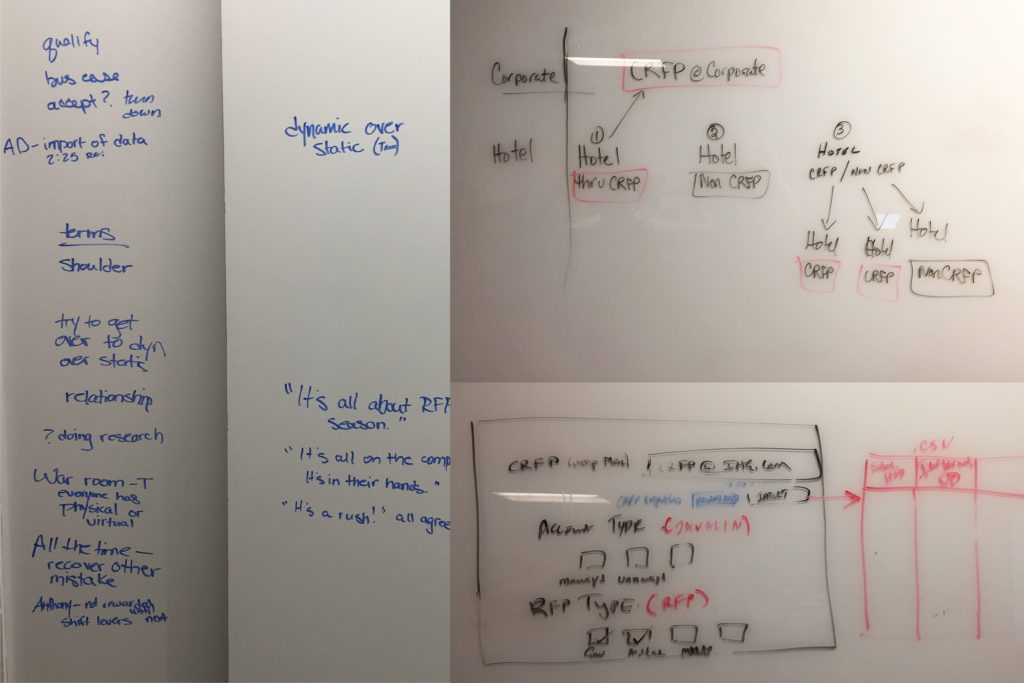
Complex RFP workflows were mapped collaboratively across design, product, and engineering teams to ensure alignment on system logic and task sequencing.
RFP Management
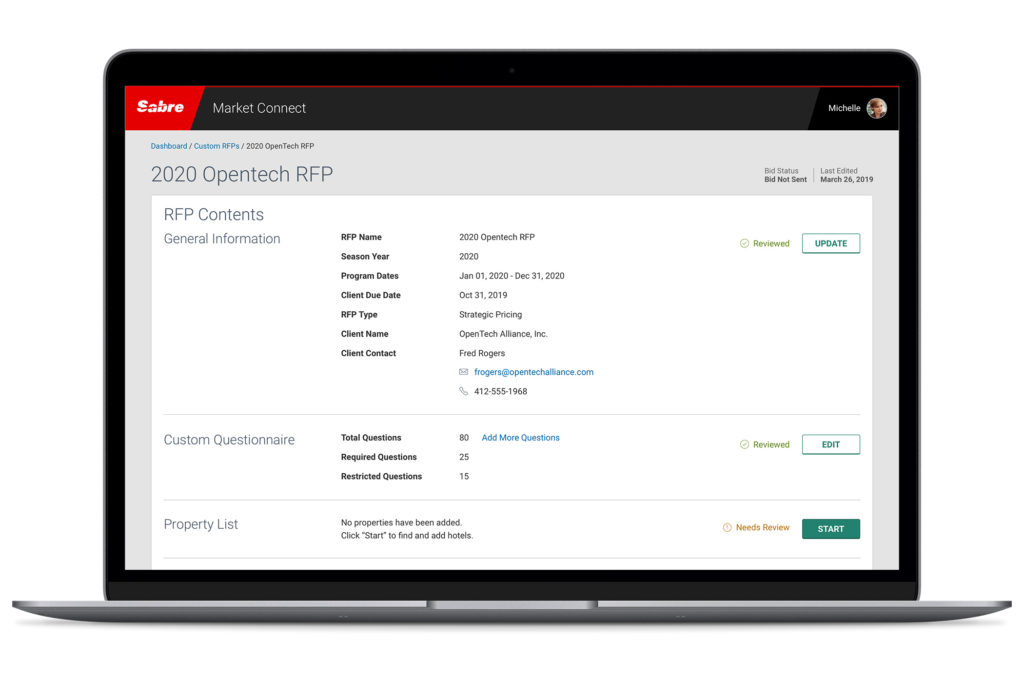
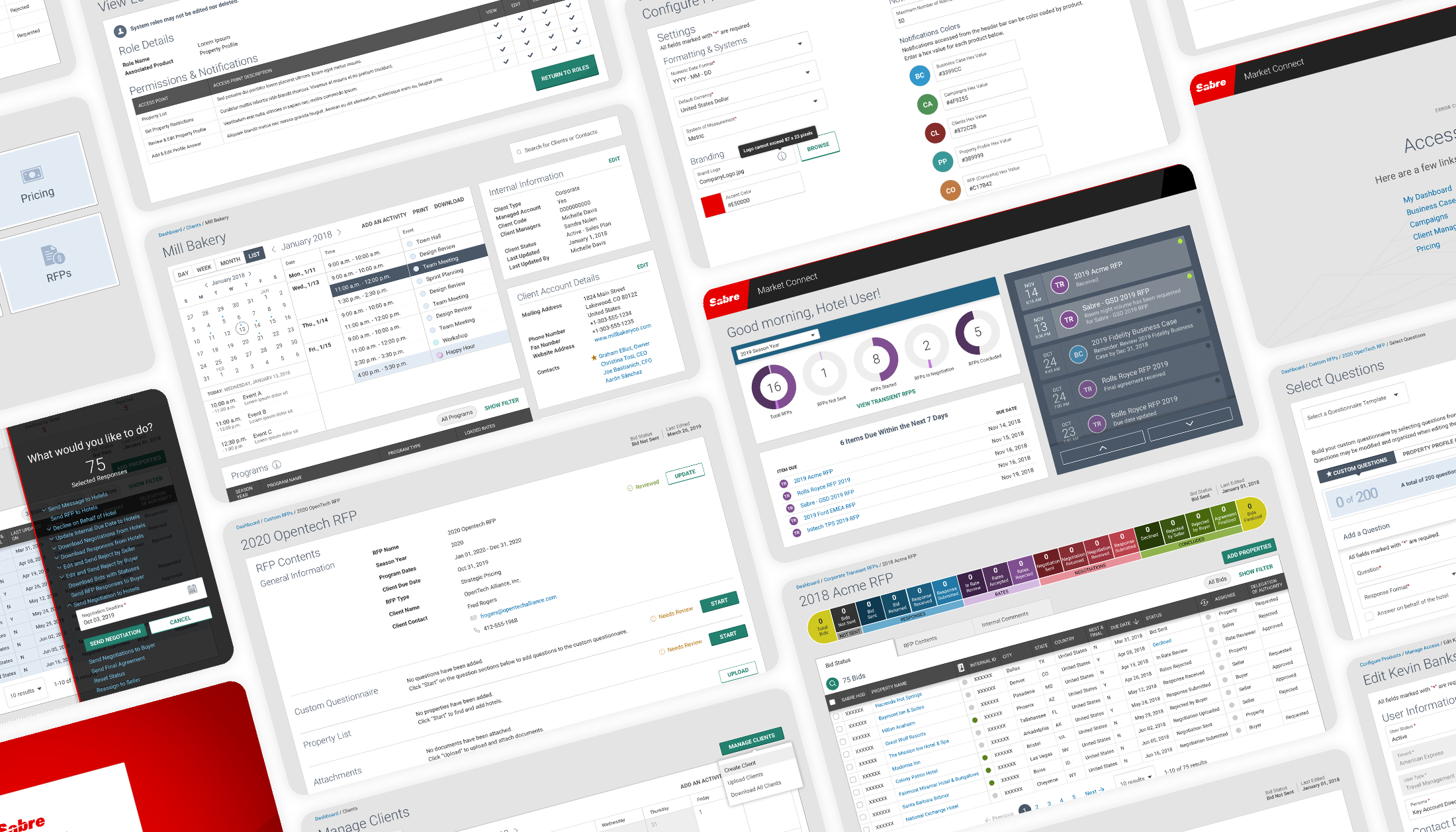
The RFP management experience consolidated fragmented rate workflows into a unified interface, improving clarity for hospitality partners managing complex bid cycles.
Operational Visibility
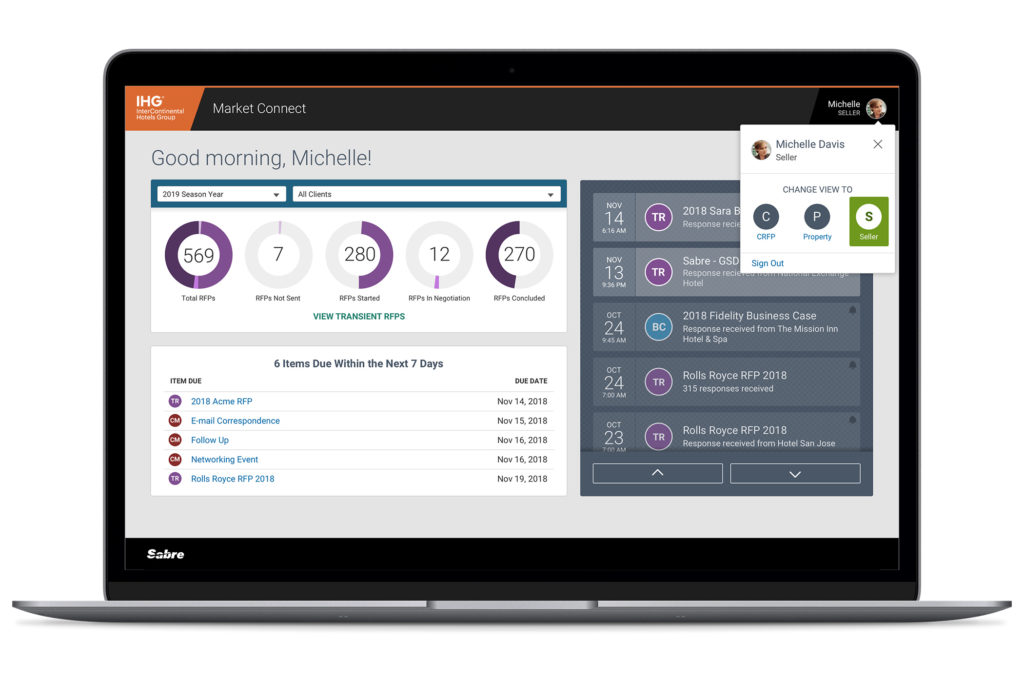
The dashboard provided role-based visibility into active RFP activity, helping hospitality teams monitor progress across seasonal contracting cycles.
Bid Tracking
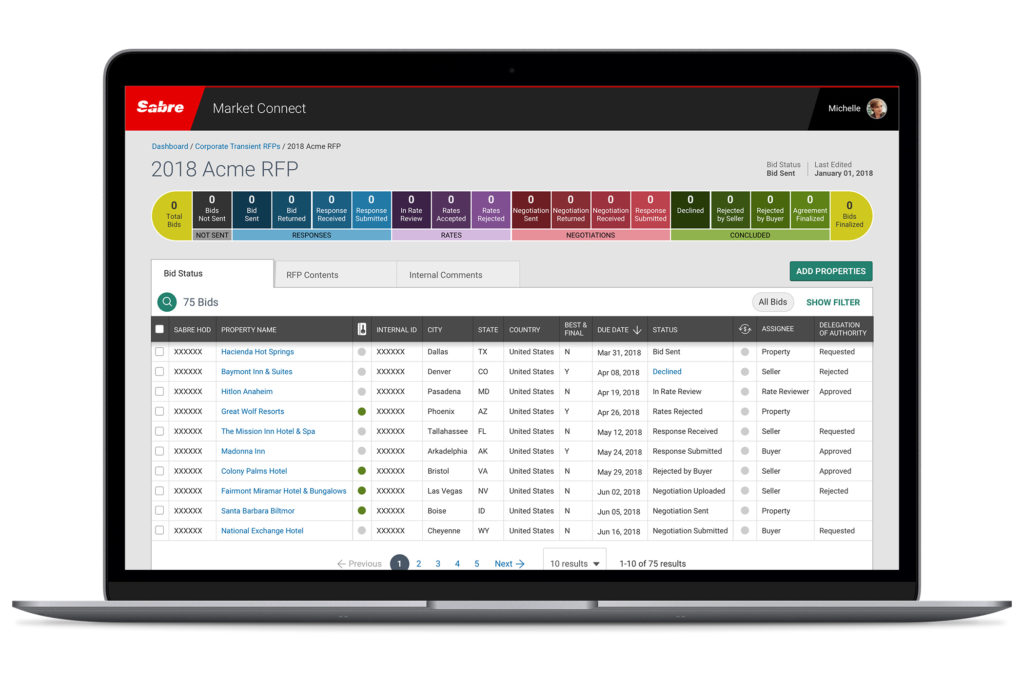
Status tracking provided transparency into supplier responses, enabling hospitality teams to monitor bid progress and make informed decisions during high-stakes negotiation periods.
Bid Account Management
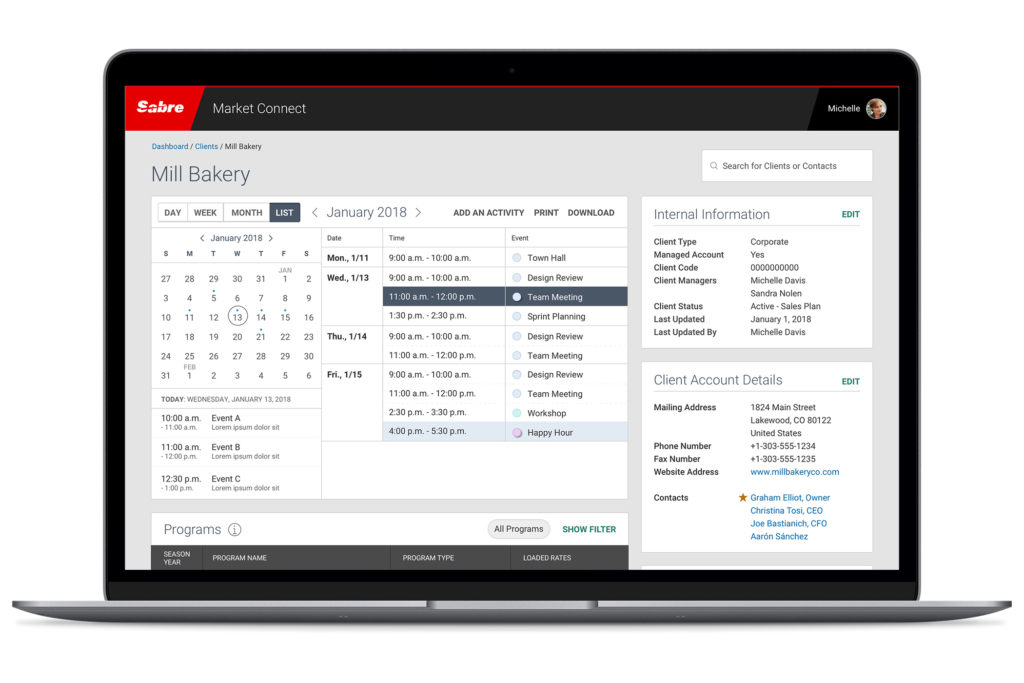
Client management screens unified account data previously scattered across multiple legacy systems, improving visibility and operational efficiency.
5. Leadership & Influence
As design lead, I:
- Directed and mentored 6 UX designers
- Partnered closely with 2 researchers
- Represented UX in executive product discussions
- Divided workstreams across a large distributed team
- Reviewed deliverables for hierarchy, consistency, and enterprise alignment
- Presented solutions to product, engineering, and hospitality stakeholders
- Stabilized delivery processes within a rapidly evolving organization
This project required sustained leadership across multiple years and organizational shifts.
6. Outcomes & Impact
Usability validation showed significant measurable improvement:
- Early task success rate: 52%
- Final validated task success rate: 98%
- Ease-of-use score: 6.4 / 7
In addition:
- Established scalable design patterns across a unified enterprise suite
- Elevated UX maturity within a 100+ contributor organization
- Created structured cross-functional alignment processes that reduced ambiguity and rework
While the broader initiative was ultimately deprioritized at the organizational level, the usability gains and process improvements were demonstrable and sustained throughout development.
7. Reflection
Market Connect reinforced a critical enterprise design principle:
At scale, the system is not just the interface — it is the coordination model behind it.
By formalizing scope, designing for role clarity, and instituting structured validation cycles, we transformed a loosely defined consolidation effort into a measurable, cohesive platform.
This project strengthened my ability to lead across distributed teams, manage long-horizon complexity, and deliver usability improvements within highly layered enterprise environments.